Anime is not just entertainment — it is Japan's most globally recognised art form. Born from manga culture and refined over decades, it carries uniquely Japanese ways of seeing the world: the beauty of effort, the weight of loss, the power of bonds.
The Big Three 三大アニメ
"The Big Three" refers to the trio of shōnen anime that dominated Weekly Shōnen Jump magazine throughout the 2000s and early 2010s — Naruto, One Piece, and Bleach. Together they shaped an entire generation of fans worldwide and set the template for what modern anime could be.
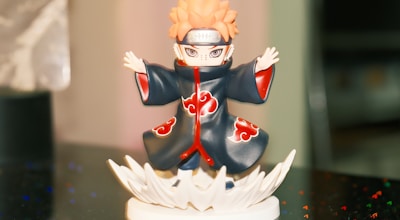
Naruto ナルト
Naruto Uzumaki is a loud, reckless orphan with a demon fox sealed inside him, shunned by his village and desperate to prove himself. Over 700 chapters he earns the respect of every person who once feared him.
- Over 250 million copies sold worldwide — one of the best-selling manga ever.
- The word dattebayo (Naruto's verbal tic, roughly "believe it!") became iconic even outside Japan.
- Its central theme — never give up on your nindo (ninja way) — resonated globally as a message about perseverance against rejection.
- The final battle arc aired during prime time in Japan and trended nationally on social media.

One Piece ワンピース
Monkey D. Luffy stretches like rubber and wants to become King of the Pirates by finding the legendary treasure "One Piece." More than an adventure, it is a decades-long meditation on freedom, loyalty, and the courage to dream.
- The world's best-selling manga series — over 530 million copies in print, surpassing any other single comic series.
- Running continuously since 1997, it holds the Guinness World Record for the most copies published for the same comic book series by a single author.
- Creator Eiichiro Oda is known to work 20-hour days; Japanese fans call his dedication shokunin-kishitsu — the craftsman spirit.
- Its theme of inherited will (the idea that a dream lives on through those who carry it) is deeply rooted in Japanese ideas of legacy and duty.
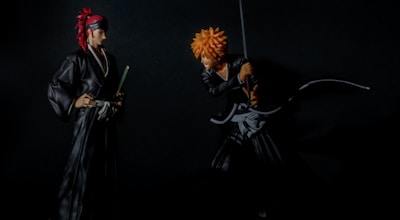
Bleach ブリーチ
High schooler Ichigo Kurosaki accidentally gains the powers of a Soul Reaper — a guardian of the dead — and is pulled into a war between worlds. Bleach is celebrated for its fashion-forward character design, atmospheric music, and iconic sword battles.
- Over 120 million copies sold worldwide, making it one of the top-selling manga of all time.
- Tite Kubo's art style influenced a generation of character designers; his approach to costume design is studied in Japanese fashion schools.
- The anime's soundtrack — composed by Shiro Sagisu — is widely regarded as among the greatest in the medium.
- After a 10-year gap, the final arc Thousand-Year Blood War returned to screens in 2022 to massive Japanese ratings.
Why Japan Loves Anime なぜ日本人はアニメを愛するのか
A Mirror of Japanese Values
Anime is soaked in distinctly Japanese concepts: ganbaru (to persist with everything you have), nakama (bonds that go beyond friendship), and giri (duty and obligation). These themes feel natural to Japanese audiences because they reflect how people are raised to see the world.
Storytelling for Every Age
Unlike Western animation, which is largely aimed at children, Japanese anime spans every audience — shōnen for young boys, shōjo for young girls, seinen for adult men, josei for adult women. A grandfather and his grandson can each have a favourite anime without overlap.
Manga Roots Run Deep
Manga — the comic book predecessor to anime — has been part of Japanese daily life since the post-war era, when Osamu Tezuka ("the God of Manga") created Astro Boy in 1952. Most Japanese people grew up reading manga on trains. Anime is simply that tradition brought to life with sound and motion.
Cultural Identity and Pride
Anime is one of Japan's most powerful cultural exports. The Japanese government officially recognises it as a cornerstone of "Cool Japan" — a national brand strategy. When the world watches anime, it is watching Japan, and for many Japanese people that is a source of genuine national pride.
Escapism Done Artfully
In a society known for long working hours and rigid social expectations, anime provides a release valve. Fantasy worlds, epic battles, and stories of underdogs triumphing offer emotional release that is widely accepted — even recommended — as healthy entertainment.
A Multi-Billion Yen Industry
Japan's anime industry generates over ¥2.74 trillion (roughly $18 billion USD) annually. Studios, voice actors, composers, merchandise manufacturers, and theme parks all revolve around it. For many Japanese people, anime is not just a hobby — it is a career, an economy, and a way of life.